Blue Rockfish
Sebastes mystinus
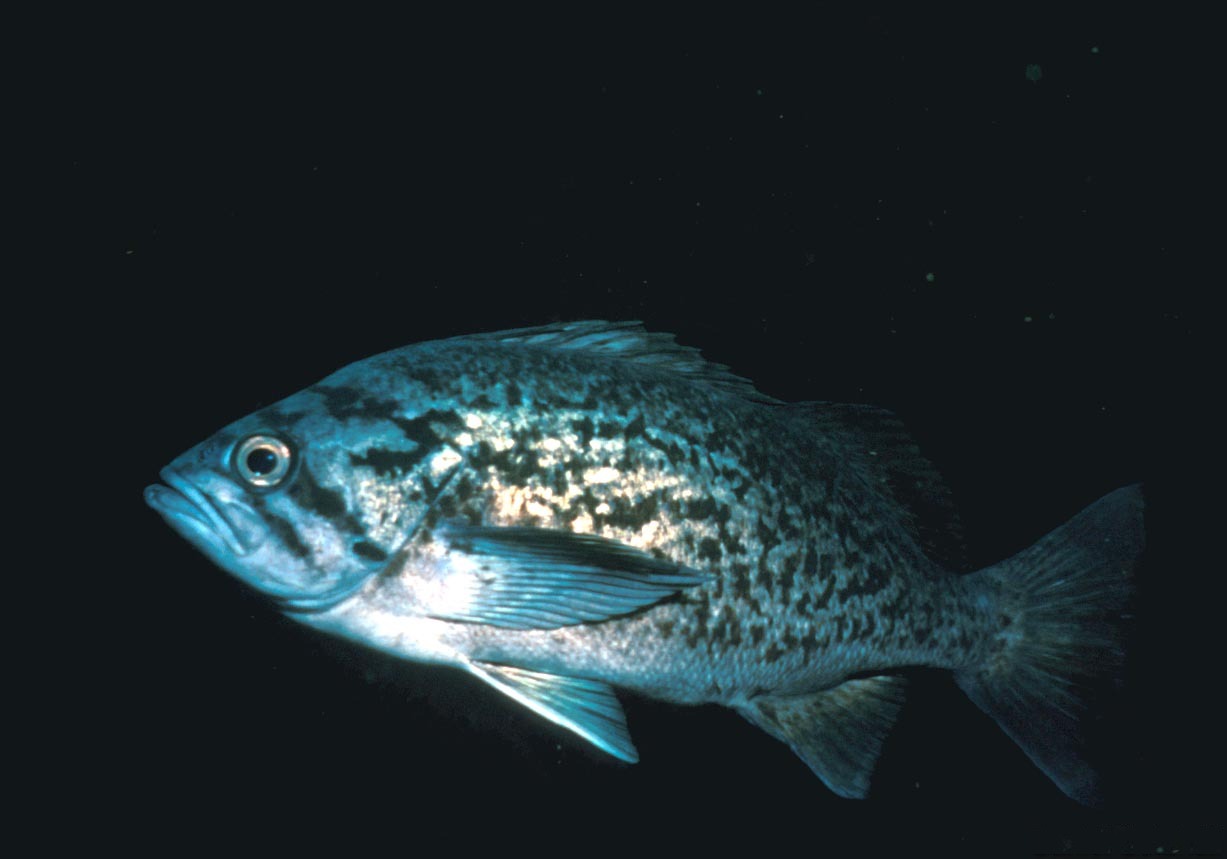
Photo: Wikimedia Commons / CC License
Frequently Asked Questions About Blue Rockfish
How do I tell a blue rockfish from a black rockfish?
Blue rockfish have a blue-gray to dusky blue coloration with scattered spotting and a slightly lighter belly, while black rockfish tend to be darker (near-black) with a more uniform dark coloration. Both have the typical rockfish body shape. In practice, they often school together and can be difficult to distinguish - for regulatory purposes, both count in the same aggregate bag limit.
Where do blue rockfish live in Northern California?
Blue rockfish school over rocky reefs and around kelp canopies throughout the NorCal coast. They're found in the water column from near the surface to about 200 feet (occasionally deeper). Any rocky reef system - Bodega Bay, Sonoma Coast, Mendocino, Fort Bragg, Point Arena - is likely to hold blue rockfish.
What is the bag limit for blue rockfish?
Blue rockfish count toward California's 10-fish aggregate rockfish daily bag limit. There is no separate size limit for blue rockfish. The aggregate includes all rockfish species combined.
What do blue rockfish eat?
Blue rockfish feed primarily on zooplankton, krill, and small fish - they're filter feeders and opportunistic predators depending on prey availability. In NorCal kelp environments, they'll eat small squid, anchovies, and juvenile fish.
Are blue rockfish good to eat?
Yes - blue rockfish have clean, mild white flesh that is excellent table fare. They're great pan-fried, baked, broiled, or in fish tacos. Smaller fish can be cooked whole. Fillet and ice them quickly after catching for the best flavor.
Watch on Your Favorite Platform
New content drops regularly across all our platforms, follow us so you never miss a trip.
TikTok
Quick catches, bite-sized tips, and behind-the-scenes moments.
Follow on TikTokYouTube
Long-form fishing trips, full camping vlogs, and in-depth how-to guides.
Subscribe, It's FreePhotos, reels, and stories from our latest fishing and camping adventures.
Follow on InstagramCommunity updates, trip announcements, and longer posts for our Facebook/Meta followers.
Follow on Facebook